Best Blazer Brands: What the Label Actually Tells You

What actually makes one blazer brand better than another — and does the name on the label even matter?
Short answer: sometimes yes, sometimes no. The longer answer is what this article covers.
Blazers are one of those wardrobe pieces where brand reputation genuinely tracks with quality — but only up to a point. Beyond that threshold, you’re paying for logo placement while the construction stays identical to something that costs a third of the price. Knowing where that line sits is the difference between a blazer that holds its shape for five years and one that starts bubbling at the chest after eighteen months of dry cleaning.
The market is noisy. “Italian craftsmanship” appears on hangtags at $150 and $1,500. “Premium wool” is written on labels that don’t even specify a super number. This guide cuts through that and tells you what specific brands actually deliver at each price point — and which ones are charging for the name alone.
What separates a genuinely good blazer brand from a marketing exercise
Two construction methods define the quality gap between brands more than fabric weight, country of origin, or how the marketing reads. Every blazer you’ll encounter falls into one of two camps: canvas construction or fused construction. Everything else is secondary.
Canvas vs. fused: the construction test that reveals everything
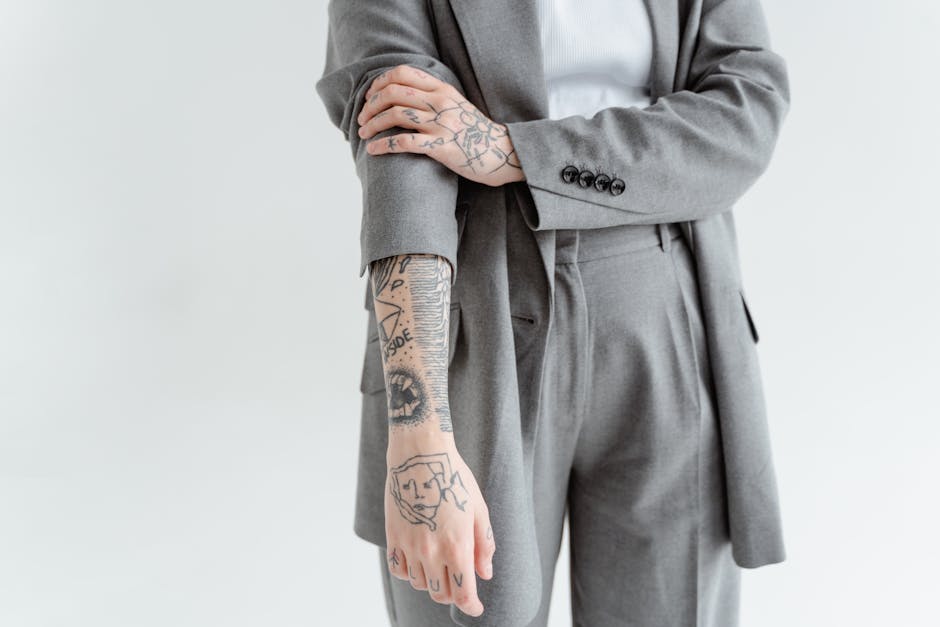
A full-canvas blazer has a layer of horsehair or wool canvas floating between the outer shell and the lining. This canvas gives the jacket its structure without being glued to anything. Over time, it molds to your body’s shape. A fused blazer — which describes most blazers under $300 — has the canvas glued directly to the fabric using heat-activated adhesive.
The fused version looks identical on the rack. It looks fine for the first twelve months. Then the glue starts to separate, usually from repeated dry cleaning, and you get that bubbling, quilted effect on the chest that signals a dead blazer. No alteration fixes it. The jacket is finished.
Here’s the test: pinch the lapel between your fingers and rub gently. If you feel two distinct layers that move independently, it’s canvas. If it feels like one stiff, uniform sheet — it’s fused. This takes ten seconds and is the single most reliable quality check you can do before buying anything.
Brands that consistently use full or half-canvas at their price points: Suitsupply (half-canvas from around $399), Boglioli (full canvas, starting around $995), and Ring Jacket (full canvas, Japanese craftsmanship, $800–$1,200). Brands that are almost entirely fused across their range: Zara, H&M, and most department store house labels. Hugo Boss sits in an awkward middle — some lines are half-canvas, most at the $400–$500 price point are not. You have to check SKU by SKU.
Fabric weight and what “Italian wool” actually means on a label
Super numbers describe how fine the wool fibers are. Super 100s, Super 120s, Super 150s — higher number means finer thread, softer feel, and significantly less durability. A Super 150s blazer drapes beautifully on the hanger but shows wear and shine patterns within a year of regular use. The fibers are simply too fine for daily friction.
For a blazer you plan to wear twice a week, Super 100s or Super 110s in a mid-weight fabric (around 260–300 grams per square meter) is the practical sweet spot. It holds its shape, doesn’t look crushed after three hours in a chair, and handles dry cleaning better than ultra-fine weaves.
Brands like Banana Republic and J.Crew rarely publish their super numbers or fabric weights, which itself tells you something. Suitsupply lists fabric specs by SKU number on their website — that level of transparency is worth something when you’re trying to compare value honestly.
Blazer brands by price tier: what you actually get
Same price range, very different value propositions. This table strips out the marketing language and tells you what construction and use case actually look like at each tier.
| Brand | Price Range | Construction | Best For | Verdict |
|---|---|---|---|---|
| Zara | $80–$150 | Fully fused | Trend-driven, short-term wear | Fine for 1–2 seasons, not an investment |
| J.Crew | $150–$280 | Mostly fused | Casual office, smart-casual | Good fits, decent quality — buy on sale |
| Banana Republic | $200–$350 | Fused to semi-constructed | Business casual, office staple | Reliable mid-range; always wait for 40% off |
| Ted Baker | $300–$500 | Semi-fused/semi-structured | Smart events, fashion-forward cuts | Style over substance — polarizing fits |
| Suitsupply | $350–$550 | Half-canvas | Business professional, weddings | Best value under $500 — strong finish quality |
| Hugo Boss | $400–$700 | Fused to half-canvas (varies by line) | Corporate environments, structured silhouette | Overpriced for construction; buy on sale only |
| Theory | $450–$700 | Semi-constructed | Minimalist aesthetics, modern professional | Excellent fabric hand, clean cuts — worth it |
| Boglioli | $900–$1,400 | Full canvas, unstructured | European smart casual, relaxed luxury | Best unstructured blazer name in this range |
| Blazé Milano | $1,200–$2,000 | Full canvas, artisanal | High fashion, statement dressing | Cult name for a reason — distinct and durable |
Clear pick at each tier: under $200, Zara or J.Crew if you’re treating the blazer as seasonal. Between $300 and $600, Suitsupply has no real competition at that construction level. Above $800, Boglioli is the first name worth taking seriously for canvas quality that actually matches the price tag.
One counterintuitive note on Hugo Boss: the Huge/Genius slim-fit line in their mainline collection is fully fused, as are most pieces in the $400–$500 range. Their Hugo by Hugo Boss diffusion line is cheaper and similarly constructed. At those prices, Suitsupply’s Havana blazer in a matching fabric wins outright on construction. The Boss name carries real weight in certain professional contexts — just know you’re paying for that, not the stitching.
The fit problem that no brand name can solve
Here is the uncomfortable truth about blazer brands: the best-named blazer looks cheap on the wrong body. Fit matters more than construction tier at any price below $1,000. A half-canvas Suitsupply blazer that pulls across the shoulders looks worse than a fused J.Crew blazer that fits perfectly.
Shoulder seam position: the one measurement that can’t be cheaply tailored
Every other blazer alteration is manageable — taking in the sides costs $30–$50, shortening the sleeves runs $20–$40. But moving a shoulder seam is a $150–$200 alteration that requires a skilled tailor and still carries real risk. The shoulder seam should land exactly where your shoulder ends and your arm begins. No overhang, no pulling inward. Try every blazer with this check first.
This is why fit-first brands matter as much as construction-first brands. Suitsupply cuts their blazers in multiple distinct fits — Havana (slightly roomier, classic Italian), Napoli (slightly trimmer), Lazio (slim), and Sienna (modern slim). These are meaningfully different, not just marketing names for the same pattern. Theory runs consistently trim through the torso. Banana Republic offers standard, slim, and extra slim. None will fit everyone — knowing which brand cuts closest to your build narrows the search considerably before you set foot in a fitting room.
How body type should guide your brand choice
Athletic build with broad shoulders and a defined waist: Suitsupply Sienna cut or Hugo Boss Slim Line. The Sienna’s suppressed waist and slightly wider shoulder works here without requiring heavy alteration.
Slim or narrow frame: Theory’s Chambers Blazer or J.Crew’s Ludlow Slim in Italian wool. Both cut close to the body without the excess fabric through the torso that drowns narrow builds.
Taller frames above 6’2": Suitsupply stocks a Long fit in most of their styles, which is genuinely rare at this price point. Most brands stop at regular length and leave tall buyers choosing between short sleeves and a hemline that drops too low.
Fuller or broader builds: Boglioli’s unstructured K-Jacket in larger sizes drapes well without adding visual weight. The lack of shoulder padding and soft canvas construction avoids the boxy effect that structured blazers create on broader frames.
When NOT to buy a designer blazer

If you need a blazer for one event — a wedding you’re attending, a one-off interview, a company gala — spending $450 on a Theory blazer or $399 on a Suitsupply piece makes no financial sense. Rent from Rent the Runway or Generation Tux, or buy a Zara blazer for $100, wear it twice, and donate it. The investment-piece argument only holds if you’ll wear the blazer at least 25–30 times. Do the math before you spend.
How to evaluate a blazer’s quality before you buy it
These checks take under two minutes. They work in a store or when reviewing detailed product photos from an online seller.
- The lapel pinch test. Pinch the lapel between your fingers and slide the layers against each other. Two independent layers that move = canvas. One fused sheet = glue construction. This single test outperforms any spec sheet.
- Check the sleeve buttonholes. Working buttonholes (called surgeon’s cuffs) on the sleeve — where you can actually unbutton them — signal higher construction. Not a universal rule, but at $300 and above it’s a reliable marker. Fake buttonholes stitched shut are common on fused blazers.
- Inspect the lining seams. Quality blazers have hand-finished lining edges with extra fabric folded in as alteration allowance. Cheap blazers have machine-finished linings with no room to adjust. Flip the hem and look.
- Look at the gorge line. The gorge line is where the collar meets the lapel. Hold the blazer at arm’s length. A clean, tight seam with no puckering means careful assembly. Puckering or visible misalignment at that junction means rushed factory work — and it will only become more visible with wear.
- Feel the shoulder padding. Press the shoulder area flat and release. Quality shoulder construction springs back evenly because the padding is integrated. Cheap shoulder pads feel like a separate floating insert — because they are — and they shift after a few wearings.
- Read the fabric label. 100% wool or high-percentage wool blends retain shape and regulate temperature. Polyester content above 30% traps body heat and accelerates shine on high-friction areas like the seat and elbows. This information is always on the label — check it every time.
Which blazer brand fits which situation
What’s the best blazer brand for a job interview?
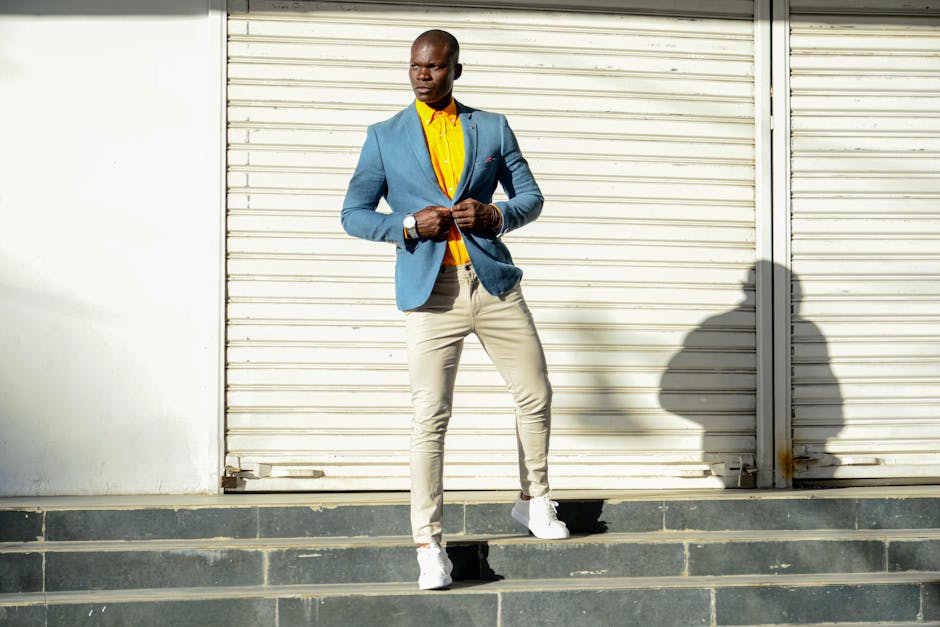
Suitsupply, without debate. The Havana or Napoli cut in navy or medium grey, half-canvas construction, clean notch lapels — it reads professional without signaling that you spent a month’s rent on a jacket. At $399–$499, it’s the most credible interview blazer at a price that remains accessible. Pair with their own trousers for a matched suit look or wear it as a separate over wool trousers. Either works.
What’s the best blazer brand for smart-casual everyday wear?
Theory’s Chambers Blazer in Precision Ponte ($495) is the answer most people aren’t expecting. It has the silhouette of a tailored blazer with the comfort of a stretch knit — no lining, machine washable, and wrinkle-resistant enough to fold into a carry-on without disaster. For a more structured option with Italian character, Boglioli’s K-Jacket ($995) is one of the most-copied unstructured blazer designs in menswear. The original holds up. Most copies don’t.
What’s the best blazer brand for women’s workwear?
The Kooples produces some of the most well-constructed women’s blazers in the $350–$500 range — structured without being stiff, available in a range of sizes, and consistently well-finished at the seams. For a more relaxed silhouette, Vince ($450–$600) makes oversized blazers in cashmere blends that hold their shape through weekly wear without looking deliberate. At the top of the market, Blazé Milano’s Club Blazer ($1,400) is the cult reference point that everyone else in this category is working from — frequently imitated, rarely matched on drape or finish.
The mistakes that cost people money on blazers
- Buying the wrong size with alteration intentions. Getting a blazer taken in at the sides is reasonable. Shortening the sleeves is reasonable. Resetting the shoulder seam costs $150–$200 and still carries risk. Buy for the shoulder first, alter everything else.
- Choosing a trendy cut over a classic silhouette. The hyper-cropped blazer, the exaggerated peak lapel, the double-breasted cut in a novelty color — these have a two-year shelf life at best. A single-breasted blazer with a notch lapel in navy, charcoal, or camel will not look dated in 2031. Buy trends at Zara prices, not investment-piece prices.
- Trusting price as a proxy for construction. Hugo Boss sells fused blazers for $600. Suitsupply sells half-canvas for $399. Price is not construction. The lapel pinch test takes ten seconds and doesn’t lie.
- Ignoring seasonal fabric weight. A Super 150s lightweight wool blazer is not the right call for year-round wear. Mid-weight wool around 260–300 grams per square meter handles temperature variation better, shows fewer wear patterns, and doesn’t shine as quickly at friction points.
- Dry cleaning too frequently. Dry cleaning degrades fused construction faster than wear does. Hang your blazer after use, brush it with a soft fabric brush, and spot-clean where possible. Most blazers need professional cleaning two to three times per year at most — not after every wearing. Frequent dry cleaning is the primary reason fused blazers bubble and separate prematurely.
- Overlooking the return policy. A blazer that fits perfectly in-store may fit differently after a day of sitting, moving, and reaching. Buy from brands with a reasonable return or exchange window — Suitsupply, Theory, and Banana Republic all allow returns within 30 days. Final-sale blazers are almost never worth the discount.