
Thrifting Vintage Fashion: Beginner’s Guide to Finding Gems
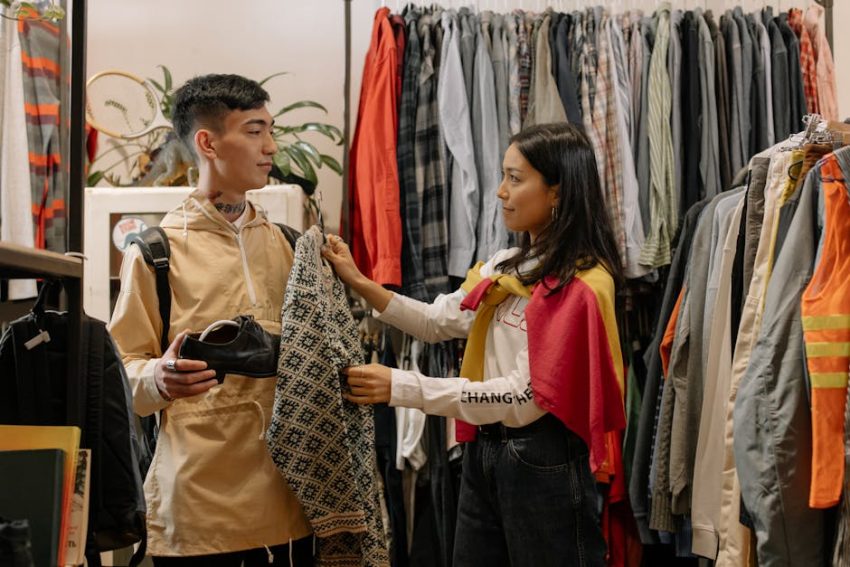
Why do some thrifters consistently pull $100 pieces for $8 while others walk out of the same store empty-handed after two hours?
The gap almost never comes down to luck. It comes down to a structured inspection method that most beginners skip entirely. Picture this: you drive to Goodwill, spend 90 minutes combing through polyester blends, find a blazer that looks promising, and buy it without a thorough check because you’re tired. You get home, try it on in better lighting, and find a cigarette burn tucked under the left lapel. The tailor quotes $40. The blazer cost $8. Net result: $48 for something that retails new for $35.
This covers the five specific mistakes that account for most beginner frustration and wasted money when thrifting vintage fashion — and the direct fix for each.
Why Most Beginners Leave Thrift Stores Empty-Handed
The default approach is visual: scan racks by color or silhouette, grab whatever looks interesting, spend time in a fitting room. This method fails because quality vintage doesn’t announce itself the way fast fashion does. The piece worth $90 on Depop looks like a rumpled jacket on a hanger. What distinguishes it lives in the fabric and construction — and both require a hands-on check.
The conventional advice is to keep going until you develop an eye. That’s technically true but unhelpfully slow. What actually accelerates learning is knowing in advance which attributes to assess: fabric composition, construction details, and brand-era markers. Thrifters who consistently find Pendleton wool shirts, 1980s Liz Claiborne blazers, and vintage Wrangler denim all follow one framework — fabric first, construction second, condition last, every time.
What Vintage Actually Means in Fashion Terms
In fashion, vintage technically means at least 20 years old. A 2003 GAP hoodie qualifies. But what drives real thrift value is the intersection of age, natural materials, durable construction, and cyclical market desirability.
Right now the market is strong for 1970s earth-tone flannels, 1980s oversized shoulder-padded blazers, 1990s minimalist denim, and early 2000s Y2K knitwear. Brand matters enormously. Levi’s vintage denim from pre-2000 uses heavier cotton than current production — a raw selvedge 501 with a leather patch (pre-1980s production) or a capital-E LEVI’S tab (pre-1971) sells for $100–$400 on resale markets. Without knowing that, you could donate the same piece for nothing at your next closet cleanout.
Other brands worth learning to spot: pre-1990 L.L. Bean chamois shirts, vintage Carhartt canvas chore coats (pre-1995 units use heavier duck canvas than later production), and Ralph Lauren Polo from the 1980s — particularly rugby shirts and cotton cable-knit sweaters that consistently sell for $45–$85 on Depop and eBay.
The Fabric Check That Filters Out 80% of the Rack
Pull the tag first. “Made in USA” or “Made in England” from a brand that existed before 1990 is your first green flag. Then check fabric content: 100% wool, 100% cotton, cotton-silk blends, and linen are your targets. Anything over 50% polyester is usually a pass — that era produced quality goods in natural fibers, not synthetics.
Rub the fabric between your fingers. Quality wool has a slight tooth — a subtle roughness polyester cannot replicate. Dense 1960s–1970s cotton has a weight and hand-feel that modern fast-fashion fabric lacks noticeably. One practical tip: most thrift stores allow 10–15 items in a fitting room at once. Use that space to inspect fabric under better lighting, not just to try things on. The fluorescent rack lighting on the main floor hides staining and wear that’s immediately obvious under a brighter bulb.
Vintage Sizing Is Not Modern Sizing
A men’s labeled Large from 1975 fits like a modern Medium. Women’s vintage sizing is more inconsistent — a labeled “12” from 1965 maps to roughly a modern 6. Never trust the label. Measure the actual garment: chest, waist, shoulder width, sleeve length. A soft tape measure fits in any coat pocket and takes 45 seconds to run. Without it, you’ll buy things that don’t fit your shoulders, no matter how well everything else checks out.
What You’re Actually Paying Across Thrift Channels
Price data varies sharply across channels — and understanding the markup structure tells you where to spend time versus money.
| Channel | Levi’s 501 Vintage Jacket | 1980s Wool Blazer | Curation Level | Best Use Case |
|---|---|---|---|---|
| Goodwill / Salvation Army | $5–$15 | $8–$20 | None | Regular diggers with time to spare |
| Curated Vintage Boutique | $85–$180 | $45–$120 | High | One-off specific purchases |
| Depop | $40–$120 | $25–$75 | Medium | Trend-driven vintage, Y2K |
| eBay Vintage Section | $30–$200+ | $15–$90 | Medium–High | Authenticated rare pieces |
| ThredUp | $18–$45 | $12–$40 | Medium | Beginners, returnable orders |
| Grailed | $50–$160 | $30–$100 | High | Men’s workwear and sportswear |
The spread between Goodwill pricing and Depop resale value is where in-person thrifting earns its reputation. A vintage denim jacket at $8 has realistic resale value of $80–$120 — but only if you know what you found and inspected it properly. Skip the check, miss the hidden damage, and you’ve replaced that margin with a repair bill.
Location shifts prices significantly. A vintage Carhartt canvas chore coat sits at $9 in a Columbus, Ohio Goodwill. The same piece runs $45 at a Brooklyn location, where reseller competition has pushed thrift prices sharply upward. Mid-size Midwest and Southern cities consistently undercut coastal thrift stores by 40–60% on comparable vintage inventory. If you travel for work, 90 minutes at a regional Salvation Army is time worth spending.
How to Identify Real Vintage in Under 2 Minutes
Before running this checklist, do a five-second silhouette scan: does the cut work for your body even at the correct size? A boxy 1980s blazer won’t transform into a sharp piece through tailoring alone. This checklist evaluates candidates that already passed the visual filter — not pieces you’re hoping to rescue aesthetically.
- Check for a union label. Pre-1980s American garments often carry ILGWU (International Ladies’ Garment Workers’ Union) or ACWA tags. Either one is a green light to inspect further.
- Read the care label carefully. US garment care labels became legally required in 1971. No label at all means pre-1971. Text-only instructions without modern icons mean 1970s. Full symbol-based care labels mean post-1990.
- Check the zipper brand. Metal TALON zippers appear on quality American-made garments pre-1980s. YKK metal zippers signal quality across eras. A plastic zipper on otherwise high-quality vintage fabric may indicate a repair — worth noting, not automatically a dealbreaker.
- Tap the buttons. Real shell, bone, or metal buttons produce a solid, dense sound. Injection-mold plastic sounds slightly hollow. Button material correlates with overall garment quality more than most buyers realize.
- Inspect seams inside out. Chain stitching on denim — looped stitches that unravel in a chain if pulled from one end — is both a quality and age marker. Flat-felled seams indicate proper construction. Serged-only seams on claimed vintage usually suggest recent or lower-quality production.
- Work through damage zones in order. Collar, cuffs, underarms, hem, pocket openings — every time, in that sequence. Moth holes in wool first appear at fold lines. Cigarette burns on blazers cluster under lapels and near side pockets. Run your fingers along every edge before making a decision.
- Smell the fabric. Smoke and mild storage odors wash out of most natural fabrics. Deep mildew embedded in wool or cotton does not. If the smell is damp and musty rather than just stale, put it down.
One critical distinction before buying: cosmetic damage versus structural damage. A stain on a cotton collar often lifts with oxygen bleach. A worn-through elbow on a wool blazer cannot be invisibly repaired. Surface damage is negotiable on price. Structural fabric failure is not recoverable at any cost worth paying on a thrift find.
The One Mistake That Turns $8 Scores Into $50 Disasters
Buying damaged items you plan to repair later.
A missing button costs $2 to replace. A blown seam takes 15 minutes with a needle. But anything requiring a professional tailor — lining replacement, structural re-stitching, significant taking-in — runs $25–$80 minimum at any urban alteration shop. Calculate that cost before walking to the register, not after you’ve worn the piece home and reconsidered it in better light. A $15 blazer needing $50 in tailoring is a $65 blazer. Compare that against the boutique price before deciding it’s still a deal.
“Later” doesn’t happen. Every closet has at least one $8 thrift score that sat unworn for a year before being donated back to the same Goodwill it came from.
Matching the Right Thrift Channel to Your Goals
Most beginners should start online before committing to weekly in-person thrift runs. This is a sequencing recommendation based on how in-person thrifting actually pays off — not a hedge.
Regular in-person thrifting rewards consistency: the same 2–3 stores visited every 1–2 weeks, restock schedules learned over time, and an understanding of which locations pull donations from neighborhoods that send quality goods. That pattern takes 2–3 months to establish. Going once, finding nothing notable, and quitting tells you nothing — it tells you about one afternoon at one store. Online channels let you build identification skills at your own pace without that setup window.
Start on ThredUp or Depop If You’re New
ThredUp is the lowest-friction starting point. Items are photographed, condition-graded (Good / Like New / New With Tags), and returnable within 14 days. A Ralph Lauren vintage Oxford shirt graded “Like New” typically runs $18–$30 on ThredUp versus $55–$85 at a curated boutique. The main tradeoff: photos sometimes miss fabric texture and hand-feel. Always check the listed fabric content before purchasing anything over $25. If it’s not listed, the piece is not worth the risk at any price.
Depop skews toward trend-driven vintage — Y2K, 90s streetwear, 80s structured workwear. Prices are negotiable; opening 15–20% below asking is standard practice and rarely offensive. Filter to sellers with 50+ completed sales and a 4.8+ star rating until your eye for condition assessment in photos develops.
When In-Person Thrifting Makes Sense
Standard Goodwill locations work well for beginners once the inspection checklist is second nature. Salvation Army stores in mid-sized US cities tend to carry better vintage supply at lower prices than coastal stores, where reseller competition has driven prices sharply upward. The Goodwill Outlet — the bins, where clothing sells by weight at roughly $1.50–$2.00 per pound — is the cheapest format available, but it requires fast fabric identification by touch since garments are piled rather than hung on racks. Skip it until you can assess fabric quality in under 30 seconds without a second look.
When to Skip Thrifting Entirely
If you need a specific item in a specific size for a specific occasion on a deadline — buy from a boutique or buy new. Thrifting is probabilistic. You cannot reliably find a women’s size 4 vintage Diane von Furstenberg wrap dress on a timeline. That’s the channel’s inherent structural limitation, not a method failure.
For men’s vintage specifically — workwear, military surplus, Japanese reproduction brands, pre-2000 American sportswear — Grailed outperforms Depop on curation and item accuracy. Community verification actively flags fakes, sellers default to including full garment measurements, and inventory skews heavily toward vintage Carhartt, pre-1995 L.L. Bean, and 1980s Ralph Lauren. For serious men’s vintage buying, it’s the most efficient online channel available right now.
The clearest path forward based on channel price data: make your first 4–6 vintage purchases on ThredUp or Depop, building your eye for condition photography and fabric descriptions at low financial risk. Then add consistent Goodwill visits once you can identify fabric quality by touch in under 30 seconds. That sequence limits expensive early mistakes while preserving access to the lowest possible prices once your skills are in place.

Leave a Reply