DIY Wedding Table Centerpieces With Spring Bulbs and Branches
Are your wedding tables starting to look bare, but a florist’s quote makes the budget impossible? A cluster of spring bulbs and flowering branches can create height, color, and movement for less money, but only if you control bloom timing, water, scent, and guest sightlines. The wrong branches shed across plates. The wrong bulbs collapse before dinner. A centerpiece also has to survive transport, venue rules, and several hours beside warm food.
This guide treats the arrangement as a practical design problem. It explains what the materials do, how much to use, which combinations last, and which shortcuts usually fail. This piece does not analyze a particular state’s law. Fire rules, candle restrictions, and venue requirements can differ by state and city.
Why Spring Bulbs and Branches Work on Wedding Tables
They solve two different visual problems
Bulbs provide the low layer. Their flowers sit close to the table, so guests can see across the arrangement and still talk comfortably. Branches provide the upper layer. Their lines create height and frame the space without requiring a large mass of flowers. Together, they give a table three levels: vessel, bloom, and branch. That structure makes a small number of stems look intentional.
The best design begins with the table, not the flower market. A 60-inch round table usually needs one central cluster about 18 to 24 inches wide. A long banquet table needs repeated units every 30 to 36 inches rather than one oversized arrangement. This spacing protects plates, glasses, and serving dishes while keeping the decor visually connected.
Branches add movement, but bulbs add the wedding color
Flowering branches often carry pale pink, white, or yellow tones. Spring bulbs provide stronger color and a closer view of the flowers. Tulips, narcissus, hyacinths, and muscari also bring different shapes: cups, stars, bells, and narrow spikes. The contrast prevents a table from looking like a single flat bouquet.
Scent and pollen need a deliberate limit
Hyacinths have a strong fragrance, and some guests may find that scent unpleasant beside a meal. Daffodils can release sap that shortens the life of other cut flowers in the same water. A restrained mix is safer: use one scented bulb variety per table, keep daffodils in their own vessel, and avoid placing pollen-heavy flowers directly beside place settings. For a dinner reception, tulips with lightly flowering branches are the most reliable visual choice.
How Many Bulbs and Branches Does Each Table Need?
Use the table size as the starting measurement
Do not buy by vague bunches. Buy by table count and stem count. The following method gives a full look without turning the centerpiece into an obstacle.
- Measure the table diameter or length. Mark a central zone no wider than one-third of the table width.
- Choose one main vessel for every round table, or one vessel cluster for every 30 to 36 inches of banquet table.
- Plan five to seven bulbs or bulb flowers for a small round table and eight to twelve for a larger round table.
- Plan three to five flowering branches for each round centerpiece. Use two branches for a narrow rectangular unit.
- Keep the tallest branch ends below eye level when guests are seated. A practical target is 12 to 18 inches above the tabletop.
- Buy a 15 percent reserve for snapped stems, bruised flowers, and late replacements.
Use a simple purchasing worksheet
For ten 60-inch round tables, a strong starting order is 60 tulips or other bulb flowers, 40 flowering branches, ten main vessels, and two spare vessels. If the venue uses long tables, divide the order into smaller clusters so guests do not face a continuous wall of branches. The goal is not maximum volume. The goal is a repeatable unit that can be assembled quickly and repaired without redesigning the whole room.
Keep the reserve flowers in clean water at the venue. Do not leave them in a hot vehicle, beside a radiator, or in direct afternoon sun. A spare bucket and a pair of sharp snips are more useful than an extra decorative object.
The Best DIY Setup Is a Low, Refillable Cluster
My recommendation: use several small water sources instead of one packed vase
A low cluster is the best format for most weddings because it survives uneven tables, gives guests a clear view, and lets you replace one damaged vessel without disturbing the rest. Use three to five small jars around one heavier branch vessel. The arrangement looks fuller than a single bouquet, but each part remains easy to lift and refill.
For a budget worksheet, an IKEA KORKEN 0.4-liter jar is a practical small vessel, with a typical planning allowance of $3 to $4 each. A Bormioli Rocco Quattro Stagioni 500-milliliter jar usually works as a slightly taller option, with a planning allowance of $4 to $6. These are not guaranteed 2026 prices; local stores, packaging, and seasonal supply can change the cost.
Choose tools that match the stem thickness
The Fiskars Steel Bypass Pruner handles branches up to about 5/8 inch in diameter and commonly carries a planning allowance of $20 to $25. A household kitchen knife is a poor substitute because it crushes woody stems and increases the chance of a slip. For the water-holding base, an OASIS Floral Products Standard Floral Foam brick measures about 9 by 4 by 3 inches and often receives a $5 to $8 planning allowance per brick. Use floral foam only when the vessel and venue setup justify it; loose jars are easier to transport and refill.
For most DIY teams, my clear pick is the jar cluster with one heavy branch vessel. It gives the best balance of cost, repairability, and guest visibility.
What Usually Goes Wrong During DIY Setup?
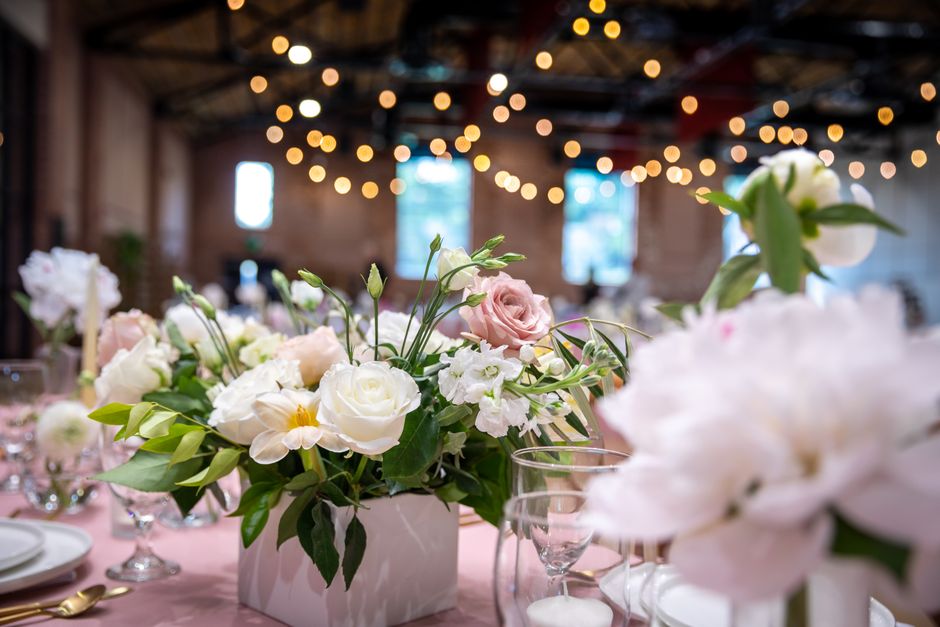
Five failures to prevent before guests arrive
- The branches are too tall. A branch that looks elegant in a storage room can block conversation at a seated table. Sit in a chair and check the sightline from both sides before repeating the design.
- The water is cloudy. Dirty buckets, submerged leaves, and warm water speed up decay. Wash vessels, strip leaves below the waterline, and replace water if it becomes cloudy.
- The vessel tips. Tall branches create leverage. Add clean stones to the base, choose a wider container, or reduce the branch count. Never balance a narrow vase on a small riser.
- The flowers open too early. Warm storage accelerates tulip and hyacinth development. Keep flowers cool, away from fruit, and out of direct sunlight. Do not freeze them or place them beside food storage without venue approval.
- The design changes from table to table. One person should assemble a sample unit and photograph it from seated height. Use that sample as the standard for every table.
When should you skip spring bulbs?
Skip bulbs if the event space is very warm, the setup team cannot provide clean water, or the venue bans loose soil and plant material. Choose high-quality silk flowers, dried branches, or professionally prepared arrangements instead. A slightly less romantic centerpiece that remains upright and clean is better than a fresh design that wilts beside the first course.
The biggest mistake is treating the centerpiece as a craft project only. It is also a transport system, a hydration system, and a guest-sightline problem.
Which DIY Spring Centerpiece Should You Choose?
For most couples: tulips, forsythia, and low glass jars
Choose this format for a dinner reception with round tables, a small setup crew, and a moderate decor budget. Use five to seven tulips per table, three to five conditioned forsythia branches, and three or four low jars. The flowers provide softness, the branches add height, and the jars create separate repair points. This design also works with white tulips and flowering quince when the wedding palette calls for pink and ivory.
For a formal room: fewer materials, stronger repetition
A formal venue benefits from restraint. Repeat the same branch shape, vessel height, and flower count instead of adding every available spring color. For a garden-style venue, potted bulbs can work if the pots are concealed and the tables can support the weight. For a hot outdoor event, use branches with durable greenery or artificial flowers instead of promising that delicate bulbs will remain perfect all afternoon.
The strongest DIY plan is the one that can be assembled, watered, transported, and repaired by the actual people working on the wedding day. The single most important takeaway is this: keep spring bulb centerpieces low, hydrated, and modular so their beauty survives the entire reception.