Spring Bridal Hair Trends: Waves, Braids and Fresh Flowers
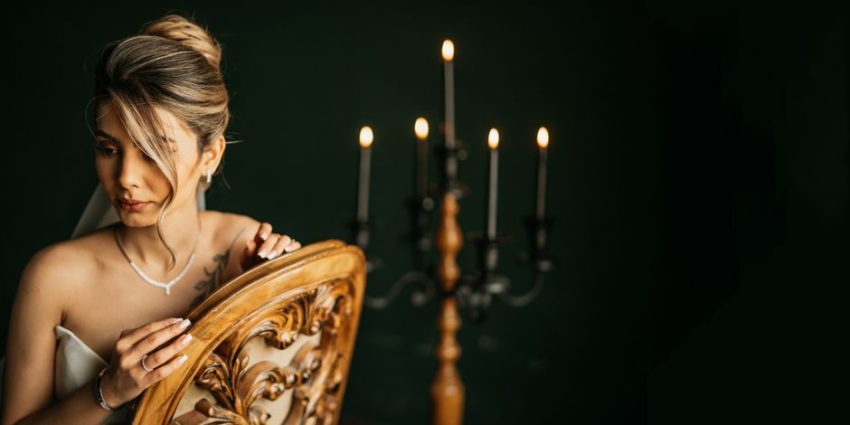
A single fresh flower can add roughly 5 to 20 grams to a bridal hairstyle, and six stems can pull at a fine-hair bun. That small detail explains why spring wedding hair needs more planning than a mood board suggests. The prettiest look is useless if the waves fall before the vows, the braid loosens during portraits, or the flowers wilt under a warm veil.
Which spring bridal hairstyle holds up best?
The strongest spring bridal looks balance softness with structure. Soft waves bring movement around the face. Braids control loose layers. Fresh flowers create the seasonal detail, but they should support the hairstyle rather than carry it.
Soft waves suit loose silhouettes
Choose soft waves for a flowing dress, open neckline, garden ceremony, or veil worn low at the back. The shape looks relaxed in photographs, but it still needs a firm base. Hair that is very clean, fine, or naturally straight may need more setting time than a Pinterest reference suggests. A side part and waves brushed into one direction usually last longer than separate, springy curls.
Braids win when movement is unavoidable
A braid is the better choice for outdoor ceremonies, windy venues, thick hair, or dresses with lace and texture. It keeps the style readable from every angle. A low braided chignon gives a formal result, while a crown braid frames the face without requiring heavy decoration.
| Style | Best setting | Weather tolerance | Flower placement | Clear verdict |
|---|---|---|---|---|
| Brushed soft waves | Indoor ceremony and reception | Low to medium | One stem behind the ear | Best for movement and romance |
| Low braided bun | Windy or long wedding day | High | Small cluster at the bun | Best for reliable hold |
| Crown braid | Garden or outdoor ceremony | Medium to high | Tiny flowers along one side | Best for a bohemian dress |
| Half-up waves | Veil and open-back dress | Medium | Flowers at the tie point | Best for showing hair length |
Bottom Line: Pick soft waves for a controlled indoor day, a braided bun for weather risk, and a crown braid when the dress already has a relaxed, botanical feel. Fresh flowers should be the final accent, not the structure holding the style together.
How to make soft waves survive a spring wedding day
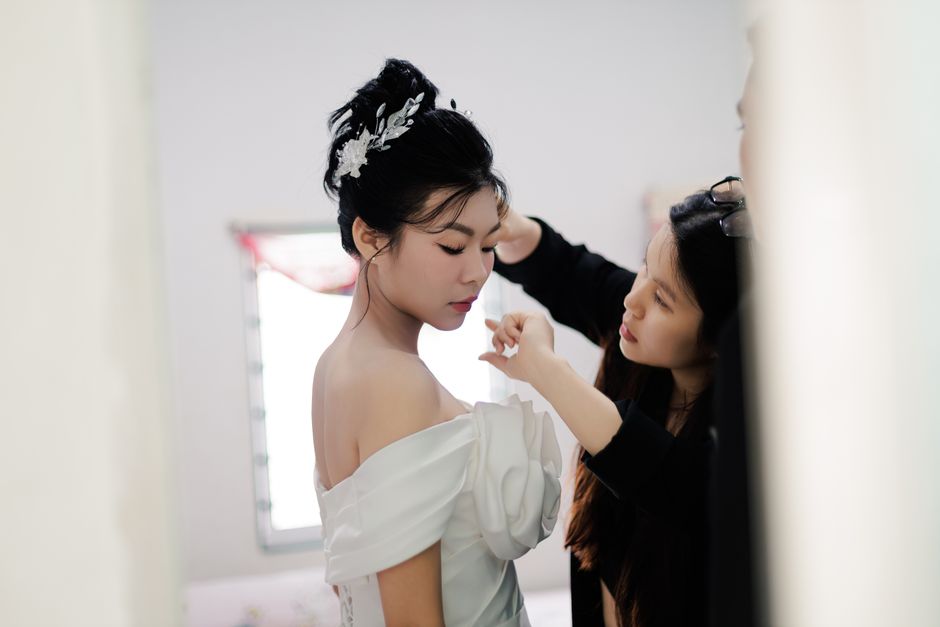
The secret to lasting waves is not a hotter tool. It is giving the hair time to cool and set before you ask it to perform. Spring weather adds moisture to the air, so a curl that looks finished at 9 a.m. can lose its shape by the ceremony if the hair still contains heat and movement.
Start with the right base
Wash your hair the evening before the trial unless your stylist gives you a different instruction. Very fresh hair can be slippery, while hair that is several days dirty can look dull and resist an even curl. Dry the roots fully. Damp roots make the finished shape collapse faster, especially under a veil or flower crown.
Ask for a soft hold rather than a stiff shell. A light mousse at the roots gives fine hair some lift. A small amount of smoothing cream on the mid-lengths controls frizz without flattening the ends. Keep oils away from the roots. They add shine, but they also reduce grip.
Set each wave before brushing it
Divide the hair into four to six sections. Work with pieces about 1 inch wide. Wrap each piece away from the face, hold it for 8 to 12 seconds, then release it into your palm instead of letting it drop. Pin or clip the curl while it cools. Repeat across the head, changing the direction only at the back if you want a more natural finish.
Wait at least 20 minutes before brushing. Then separate the curls with your fingers or a wide-tooth comb. Brush from the ends upward, never from the roots down. Finish with a flexible spray from about 10 inches away. Too much spray in one pass creates a brittle surface that breaks when the bride hugs people, puts on a veil, or moves through humid air.
Test the style outside for 30 minutes during the trial. Walk, sit, turn your head, and wear the planned earrings. If the waves fall during that test, the wedding day will not rescue them. The fix may be a smaller barrel, more cooling time, a half-up anchor, or a decision to choose braids instead.
How to place fresh flowers without a wilted hairstyle
Fresh flowers work best when they are treated as lightweight accessories, not miniature bouquets. My clear recommendation is one focal cluster of two to five small stems. It photographs better than scattered flowers, weighs less, and gives the florist a simpler job.
1. Choose flowers for structure
- Pick flowers with firm stems and petals that tolerate several hours without water. Waxflower, baby’s breath, limonium, small spray roses, and hardy greenery are practical spring choices.
- Use delicate blooms such as sweet peas or ranunculus only when the florist can condition them properly and deliver them close to styling time.
- Avoid large, fully open flowers on fine hair. A single heavy rose can pull a low bun sideways, especially when the hair is smooth.
- Ask for each stem to be cut short and wrapped for insertion. Long exposed stems catch on veils, earrings, and dress fabric.
2. Install the flowers after the hairstyle is secure
- Finish the braid, bun, or wave pattern before inserting any flowers. Moving flowers during styling bruises petals and loosens the base.
- Place the main cluster over a hidden anchor, such as a pinned braid or the center of a bun. Hairpins should cross in opposite directions so the decoration cannot slide out in one motion.
- Keep flowers away from the veil comb unless both pieces have been tested together. A comb can crush petals or pull at a braid when removed.
- Store the stems in a cool container until the stylist is ready. Do not place the bouquet in a hot car or in direct sun before the ceremony.
Do not buy flowers based only on color. A pale bloom that bruises easily can look worse than a slightly darker flower with firm petals. If the venue is hot, substitute high-quality silk flowers for the most fragile pieces and keep one real stem near the face for the scent and close-up photographs.
Bottom Line: Use fresh flowers when the florist can control timing, conditioning, and weight. Choose silk or dried accents when the wedding includes heat, travel, long outdoor portraits, or a hairstyle that cannot tolerate extra tension.
Spring bridal hair questions with clear answers
Should I wear my hair up for an outdoor spring wedding?
Yes, if wind, humidity, or a long portrait schedule is likely. A low braided bun or pinned half-up style has a stronger base than loose waves. Keep a few face-framing pieces soft, but anchor the majority of the hair before adding flowers. That gives the photographs movement without asking every strand to stay perfect for eight hours.
Can fresh flowers stay in the hair all day?
Hardy flowers can, but only with proper conditioning and cool storage before styling. Ask the florist how long the exact variety can remain out of water. Replace a large cluster with two or three small stems if the hair feels pulled during the trial. Discomfort is a useful warning, not a bridal requirement.
How early should I book a bridal hair trial?
Book the trial six to ten weeks before the wedding, then repeat it if the haircut, color, extensions, veil, or flower plan changes. Bring the actual veil and earrings. Take front, side, and back photographs in daylight. A style that looks delicate in a salon mirror may disappear against a pale dress, while a tiny flower cluster can look perfectly balanced in outdoor portraits.
What is the safest choice for fine hair?
Choose a lightly textured low bun with a narrow braid and one small flower cluster. Fine hair often loses loose waves first, especially in damp spring air. If you want movement, keep it around the face and crown while anchoring the lengths. That is the practical compromise: soft in photographs, secure in real life.
The best spring bridal hairstyle is the one that survives the actual day. If a flower adds 5 to 20 grams, the solution is not to abandon flowers; it is to place fewer stems on a stronger anchor. Soft waves, controlled braids, and fresh blooms can share the same look when each part has a job.