An Easy Spring Home Refresh for Newlyweds Moving in Together
The best spring home refresh for newlyweds starts with less shopping, not more. Spend one afternoon clearing visual clutter, agree on a simple color rule, then buy only the pieces that solve a daily problem. This seven-step plan gives you a cleaner home, a calmer move-in process, and room for both of your styles without turning the living room into a showroom.
Start with a 90-minute reset, not a shopping cart
Your first shared home will feel messy because two households are becoming one. That does not mean you need new decor. It means you need a fast way to decide what belongs in the room.
Use four floor zones before unpacking
Clear one room at a time. Mark four zones with paper or painter’s tape: keep here, keep elsewhere, donate, and decide later. The fourth zone matters because tired couples make bad decisions at 9 p.m. Put uncertain items in one labeled box and set a date seven days later to review it. If nobody has used or missed an item by then, donate it.
Choose the room that controls your mood
Start with the entryway or living room, not the bedroom. These spaces create the first impression every time you come home. Remove empty boxes, duplicate mugs, unused cords, and anything blocking a walkway. Keep at least 30 inches of clear walking space around the main route from the door to the kitchen. Open one window for ten minutes, wipe the most visible surfaces, and place one useful object near the door, such as a bowl for keys.
Do not buy storage until you know what must be stored. A basket purchased before the sorting stage often becomes a basket of unsolved clutter. Your first win should be visible floor space and a clear landing place for everyday items.
Use one color rule to make two homes feel shared
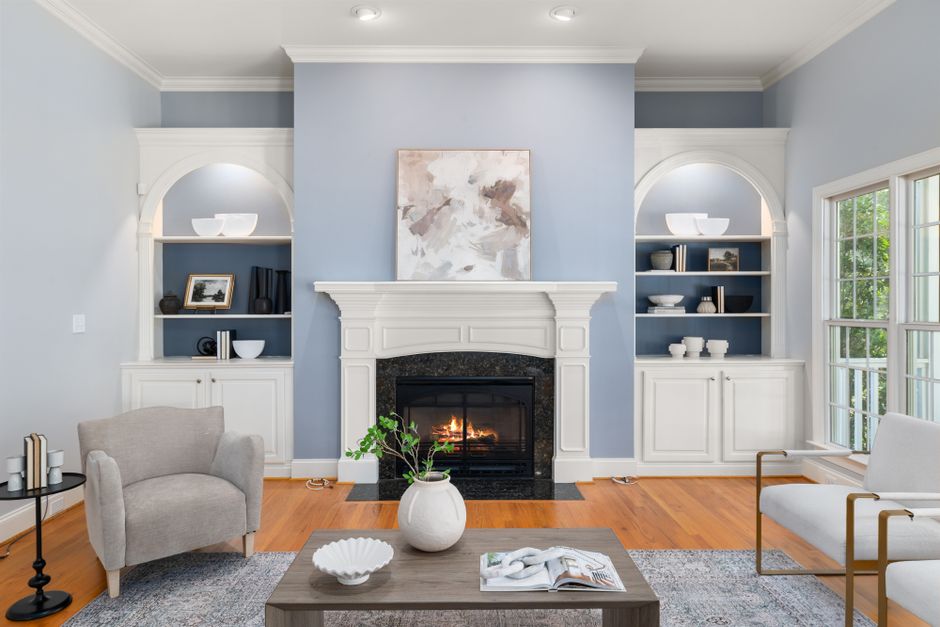
Pick one base color, one warm or cool metal, and one natural texture. That is enough to connect furniture and clothing-inspired styling details across a new home. A strong choice for spring is warm white, pale wood, and black metal, with one accent such as sage, sky blue, or butter yellow.
1. Start with what you already own
Lay out the largest pieces first: sofa, bed, table, bookcase, and curtains. Ignore small accessories until these items work together. If one partner owns mostly cool gray and the other owns warm beige, use wood and cream to bridge the gap instead of replacing everything.
2. Repeat the accent three times
Use the accent color in three different forms, such as a cushion cover, a vase, and a framed print. Repetition makes a small amount of color look intentional. Do not place every accent item in one corner. Spread them across the room so the eye moves through the space.
3. Stop at three visible patterns
Three patterns are enough for most small rooms: one large-scale pattern, one small print, and one quiet texture. If a floral curtain, striped cushion, and graphic rug compete for attention, remove one before buying another. The best spring refresh feels lighter because the room has fewer decisions in view.
Choose storage that earns its footprint
Buy storage only when it makes a repeated task faster. For a narrow entryway or kitchen, the IKEA RÅSKOG utility cart is my clear pick at about $49.99. Its three tiers measure roughly 13.75 by 17.75 inches, so it can hold produce, cleaning supplies, or mail without taking over the floor. It wins for renters because you can move it without drilling into a wall.
Use vertical space for small daily items
The IKEA SKÅDIS pegboard starts at about $19.99 for a compact board and works well above a desk, laundry area, or coffee station. Add hooks for scissors, charging cables, or keys. Keep the bottom 12 inches clear so the board does not become a dense wall of objects. Place the items you use daily at eye level and everything else higher.
Measure before ordering. Write down the width of the wall, the depth of the furniture below it, and the direction of nearby doors. A storage item that blocks a cabinet or creates a narrow walkway has failed, even if it looks attractive online. Leave at least two inches between a cabinet and a wall when you need to open doors or pull out drawers.
Skip storage when the real problem is too much stuff
Do not buy a larger shelf to protect things neither partner wants. Start with one small container for duplicates. If it fills quickly, remove items before adding another container. The RÅSKOG cart is best for flexible, visible storage; the SKÅDIS board is best for small tools and accessories. Neither product fixes overbuying, and both work better when each item has one named home.
Fix light and air before styling surfaces
Lighting and air quality change how a home feels more than another decorative object. Fix those first. For a smart bulb, the Philips Hue White Ambiance A19 is the strongest choice for a shared bedroom or living room at about $44.99 per bulb. It reaches up to 1,100 lumens and shifts from warm white to cooler daylight, so one lamp can support winding down, cleaning, and reading.
Set three lighting scenes
Create a bright morning setting, a neutral cleaning setting, and a warm evening setting. Keep the evening setting near 2,200 to 2,700 kelvin when possible. Place a lamp at shoulder height beside the sofa instead of relying on one ceiling fixture. This reduces harsh shadows and makes a rental feel more personal without new furniture.
Use an air purifier for a real problem
The Levoit Core 300S costs about $149.99, uses a 24-watt motor, and lists a clean air delivery rate of up to 141 cubic feet per minute. It is a sensible pick for a bedroom with dust, pollen, or cooking odors because its small footprint fits on a dresser or side table. Choose it for a measurable air issue, not because every spring decorating video shows one.
Keep three generic checks in the routine. Wash the HVAC filter on its printed schedule. Clean ceiling-fan blades before opening windows. Keep curtains away from heaters and air vents. Do not buy a purifier for a room larger than its stated coverage area, and do not hide it behind a sofa where air cannot circulate. The verdict is simple: improve the light you use every day, then address air quality only when your home has a clear need.
Create a seven-day unpacking routine you can both follow
A shared routine prevents one person from becoming the permanent project manager. Assign tasks by time, not by assumptions about who is better at organizing. Set a 25-minute timer, stop for five minutes, and end each session with a visible result.
What should happen on each day?
Day one: clear the entryway and create a key, mail, and shoe drop zone. Day two: set up the bedroom and remove empty packaging. Day three: sort kitchen duplicates and choose one drawer for shared tools. Day four: arrange the living room around the clearest walking path. Day five: handle laundry, cleaning supplies, and bathroom storage. Day six: add textiles, plants, and personal objects. Day seven: walk through the home together and list only three remaining problems.
How do you avoid turning chores into conflict?
Use neutral questions: Where would you look for this? How often will we use it? What must stay easy to reach? Each person gets one no-questions-asked personal area, such as a desk drawer or closet shelf. Shared rooms need shared decisions, but private corners can hold different tastes. The best result is not perfect matching. It is a home where both people can find what they need without asking for help.
Finish with one dining corner worth using
End the refresh with a place for an ordinary meal. Newlyweds often spend money on wall art before creating somewhere comfortable to eat, talk, or sort bills. A useful dining corner gives the home a daily ritual, even when the rest of the boxes are still waiting.
Pick the table for your real footprint
The IKEA NORDEN gateleg table costs about $349.99 and expands from a compact folded form to a larger table for guests. It is the best choice for a small apartment that needs flexibility, but it is not the right buy if you have no clear storage space for the folded sides or if the room already has a full-size dining table. Measure the open and closed dimensions before purchase, then mark both footprints on the floor with tape.
Add softness without filling the room
Use one washable runner, two comfortable chairs, and a shallow bowl for fruit or keys. Keep the tabletop at least 60 percent clear. A crowded table becomes a dumping ground within a week. Add one spring detail, such as clipped branches in a narrow glass, instead of a collection of seasonal decorations.
Now return to the first evening in the new home. The boxes are sorted, the walkway is open, the lights feel warm, and two people can sit down without balancing dinner on their knees. That is the point of a spring home refresh for newlyweds: not a perfect room, but a shared space that makes ordinary life easier to begin.